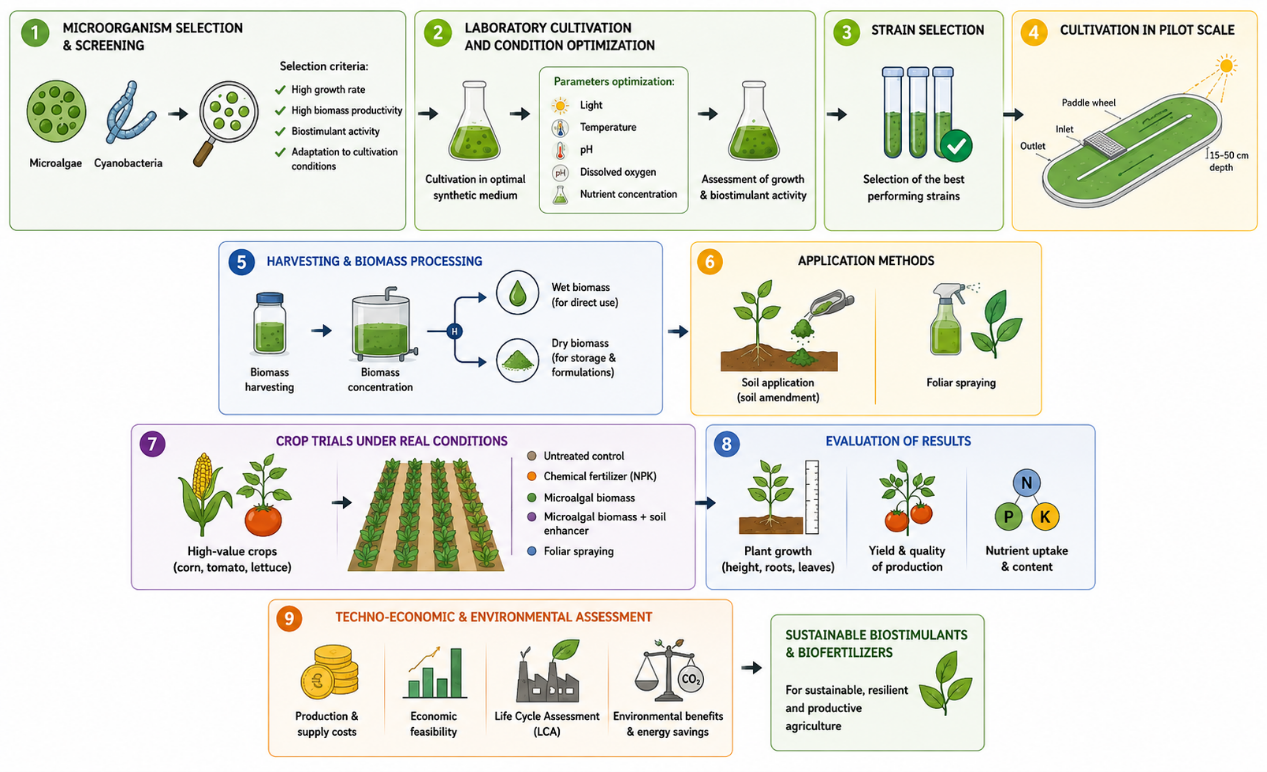
The BioBOOST project aims to develop and evaluate innovative biofertilizers and biostimulants produced from photosynthetic microorganisms, such as microalgae and cyanobacteria, in order to support a more sustainable and efficient agricultural sector.
The main objective of the project is the development of an integrated and environmentally friendly process for the production of biofertilizers and biostimulants by utilizing the biomass of photosynthetic microorganisms as a natural alternative to conventional chemical fertilizers.
The main objectives of the project include:
Selection and optimization of microorganisms
The project focuses on the selection of suitable microalgae and cyanobacterial strains with high potential for producing bioactive and biostimulant compounds. In parallel, cultivation conditions such as temperature, light intensity, pH, and nutrient availability will be optimized to maximize biomass productivity and the accumulation of valuable bioactive molecules.
Biomass production at pilot scale
A key objective of BioBOOST is the transfer of cultivation processes from laboratory scale to pilot-scale production through the development of open-type photobioreactors. Pilot-scale cultivation will enable the evaluation of process stability, productivity, and applicability under realistic operating conditions.
Development and evaluation of biofertilizers and biostimulants
The produced biomass will be applied as biofertilizer and biostimulant in crops of high agricultural importance, such as maize and tomato. The project will evaluate its effects on:
- plant growth and development
- crop productivity and yield
- nutrient uptake efficiency
- soil fertility and microbial activity
- plant tolerance to environmental stresses
Understanding biostimulant mechanisms
Another important objective is the investigation of the molecular and metabolic mechanisms responsible for the biostimulant activity of photosynthetic microorganisms. Advanced analytical approaches, including metabolomics and genomic analysis, will be used to identify the bioactive compounds and metabolic pathways involved in plant growth promotion and stress response.
Environmental and technoeconomic assessment
The project also aims to evaluate the environmental and economic sustainability of the proposed production process. The innovative biofertilizers will be compared with conventional fertilizers in terms of:
- production cost
- energy consumption
- environmental footprint
- scalability and industrial applicability
- through technoeconomic analysis and Life Cycle Assessment (LCA).
The vision of BioBOOST
BioBOOST aspires to contribute to the transition toward more resilient and sustainable agricultural systems by reducing dependence on synthetic agrochemicals and promoting biotechnology-based and circular bioeconomy solutions. Through the exploitation of microalgae and cyanobacteria, the project aims to create innovative tools for the agriculture of the future, generating benefits for the environment, agricultural productivity, and society.
What are biofertilizers and biostimulants?
Biofertilizers are natural products containing living microorganisms or biologically active compounds that contribute to improving soil fertility and plant nutrition. They act by enhancing the natural biological processes of the soil and helping plants utilize available nutrients more efficiently.
Biofertilizers can:
- increase the availability of nitrogen and phosphorus
- improve soil microbial activity
- enhance root system development
- contribute to maintaining soil health and structure
- reduce the need for chemical fertilizers
Their use is considered a key component of sustainable agriculture and the circular bioeconomy, as they rely on natural biological mechanisms with a lower environmental footprint.
Biostimulants are natural or biotechnological substances that activate the physiological processes of plants. They do not replace nutrients, but instead enhance the ability of plants to grow more efficiently and respond better to unfavorable environmental conditions.
Biostimulants can:
- enhance nutrient uptake and utilization
- improve photosynthesis and root system development
- increase plant tolerance to environmental stresses such as drought, salinity, and extreme temperatures
- promote plant growth and productivity
- contribute to improving the quality of agricultural products
Many modern biostimulants are produced from natural raw materials such as microalgae and cyanobacteria, which contain high-value bioactive compounds including amino acids, polysaccharides, phytohormones, and antioxidants.